The promise of tokenized real-world assets has always been clear. Bring the world's largest asset classes onchain. Make them programmable, globally transferable, and composable with DeFi. Unlock trillions in capital that currently moves slowly, expensively, and through too many intermediaries.
But after years working at the intersection of institutional finance and blockchain infrastructure, including our time building tokenization rails at Securrency (now DTCC Digital Assets), we kept running into the same wall. Tokenization solved the issuance problem. It did not solve the liquidity problem.
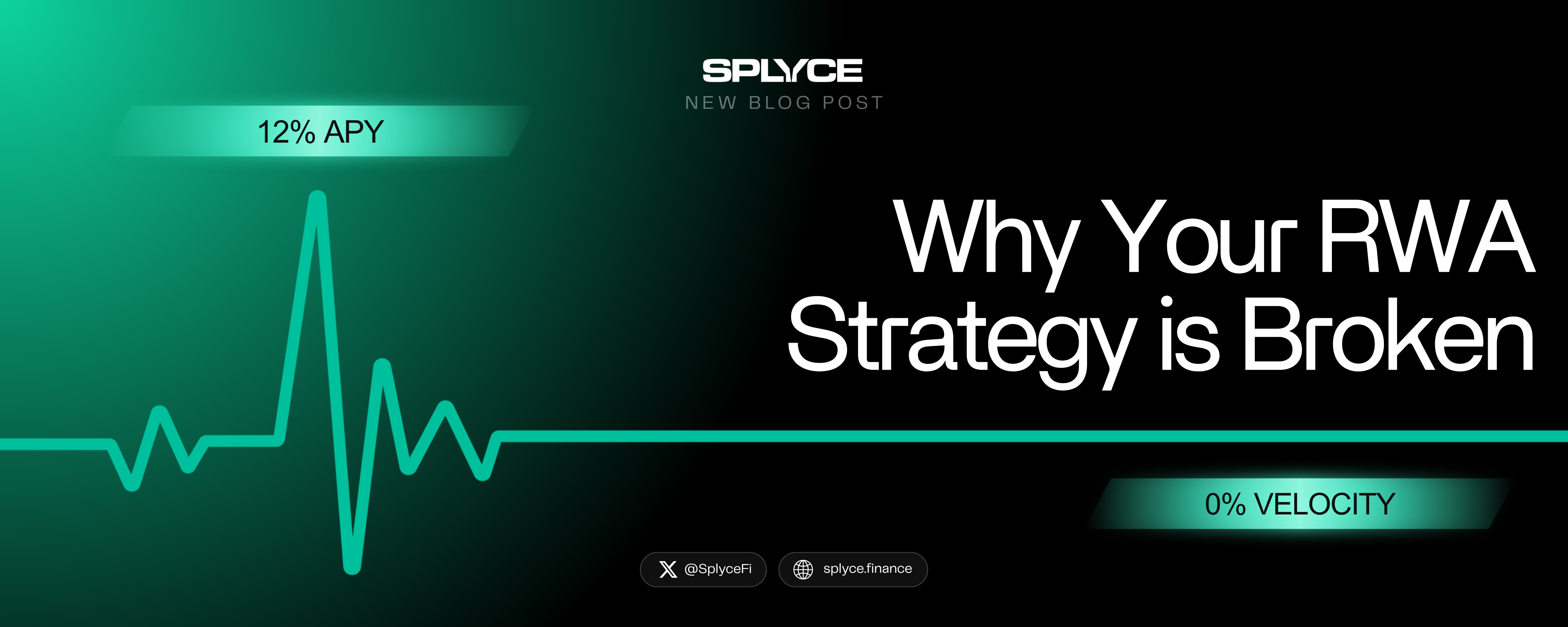
A tokenized treasury sitting in a wallet is not productive capital. It is a PDF with a blockchain address. The asset exists onchain but it does not move, it does not generate new economic activity, and it does not connect to the DeFi ecosystem that was supposed to unlock its potential. Most tokenized RWAs today are exactly this: issued, but idle. Over $300 billion tokenized. Less than 8% with any meaningful DeFi utility.
The missing piece is not more tokenization. It is credit markets.
The instinct across DeFi has been to solve RWA liquidity the way crypto solves everything: build a DEX, seed an AMM pool, let the market trade. But tokenized fund shares and private credit positions are not memecoins. They have low trading velocity, long duration, and thin secondary markets even in TradFi. Forcing them into an AMM creates pools with no depth, wide spreads, and impermanent loss that exceeds the yield the asset was supposed to generate. The DEX model requires the RWA to be liquid. Most RWAs are not, and never will be.
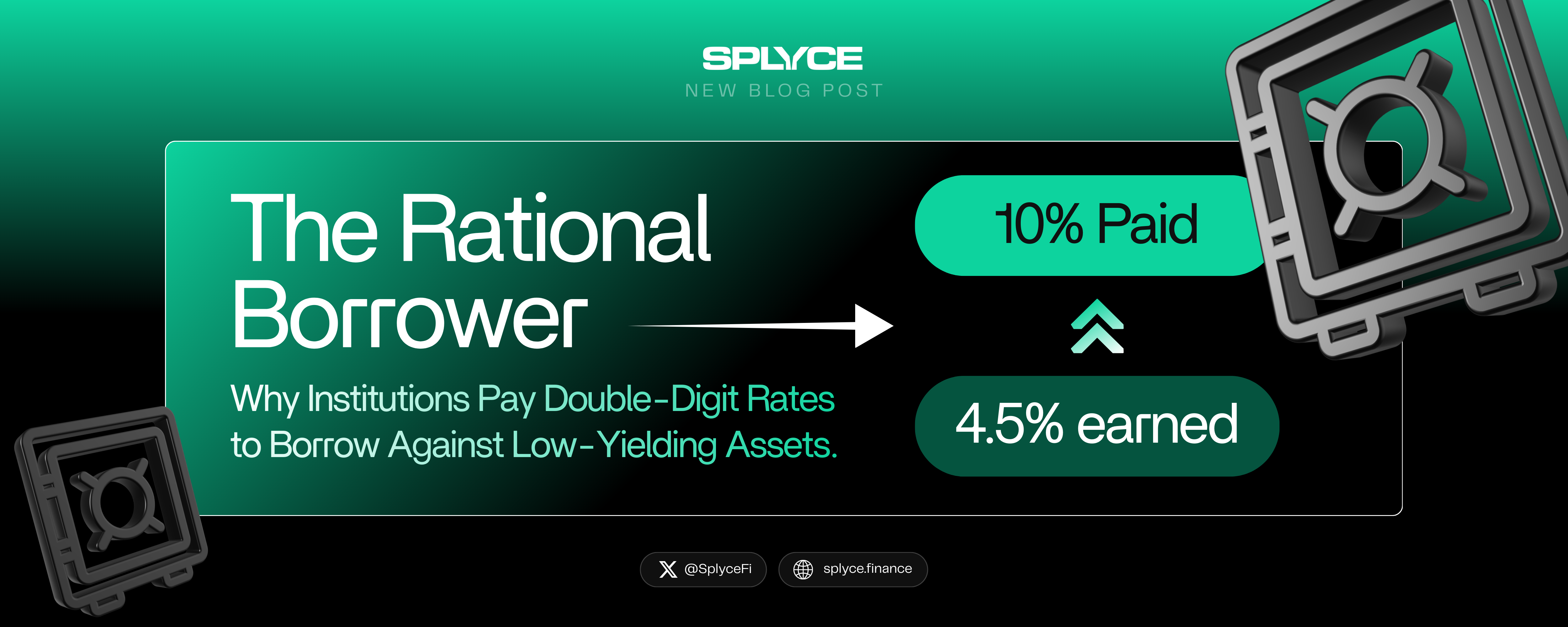
Credit markets do not need the underlying asset to trade. A borrower posts a tokenized fund share as collateral, draws USDC against it at a fixed rate, and deploys that capital. The RWA never changes hands on a DEX. It sits in escrow, backing an obligation, exactly the way collateral works in every functioning credit market. The liquid layer is USDC, not the RWA itself.
RWAs need DeFi for liquidity. DeFi needs RWAs for yield that is uncorrelated to crypto market cycles. Lending markets are where these two worlds connect. The lender earns yield anchored to real-world credit, not to how many people happen to be borrowing on Aave that week. Both sides get something they cannot get anywhere else.
That is the insight we are building from. Not floating rates. Not commingled pools. Not synthetic fixed rates that add a swap counterparty and call it a solution. A fixed rate, locked at origination, for a fixed term, in an isolated vault with no oracles and no contagion risk. The lending market that finally makes tokenized assets productive.
The Strategic Round
We have closed our strategic round, backed by Sui Foundation, Stellar Development Foundation, Solana Foundation, Lucid Ventures, Sarson Funds, and Kin Capital.
Every investor in this round is also an infrastructure partner. The foundations bring ecosystem reach and distribution across the three chains where Splyce will launch. The institutional allocators bring introductions to the counterparties that will make Splyce's lending markets real. Capital was a prerequisite. What made the round strategic is everything that comes with it.
What We Are Building
Splyce has two products. They are designed to work together. Fixed-income allocators already know the core product by a different name: a bond. We are bringing it onchain.
Single Asset Vaults are isolated, fixed-rate, fixed-term lending markets. One borrower. One collateral type. One rate locked at origination. No oracles. No commingled pools. No mid-term liquidation cascade. An institutional borrower posts collateral, draws USDC at a rate they agreed upfront, and repays at maturity. The protocol asks one question: was the loan repaid? For lenders, this means something that has never existed in DeFi: the ability to choose a specific institutional counterparty, lend against a vault that carries their name, and earn a rate that holds for the full term.
splyceUSDC is a yield-bearing token that gives lenders access to real-world credit yield without managing individual vault positions. Deposit USDC, receive splyceUSDC. Yield compounds automatically into a rising share price. No staking, no claiming, no lock-ups. The yield comes from two sources: short-duration DeFi instruments for the liquid portion, and credit activity through Single Asset Vaults for the fixed-income portion. The result is a blended 7-8% APY target that does not compress when DeFi yields fall or when the Fed cuts rates. That structural uncorrelation is what makes splyceUSDC different from every other yield-bearing stablecoin on the market.
Why Simplicity Is the Strategy
The DeFi lending landscape in 2026 is defined by complexity. Commingled collateral. Public allocators anyone can call. Curated vaults with governance risk mid-position. Oracle price feeds that can be manipulated or fail under stress. Every layer of complexity is a new attack surface.
Splyce's architecture is the opposite. Fixed terms mean there is no mid-term decision to make. Oracle-free design means there is nothing to manipulate. Isolated vaults mean a default in one vault affects nothing else. When Resolv's exploit cascaded through Morpho vaults in early 2026, the damage spread because curators had accepted the same compromised asset across multiple markets and automated reallocation systems kept deploying capital into deteriorating positions. In a SAV, that contagion is structurally impossible: one borrower, one collateral type, no reallocation mechanism, no exposure to anything outside the vault. Simplicity is not a design compromise. It is the product.
10,000 and Counting
Before we have deployed a single dollar of SAV credit, over 10,000 people have pre-registered through Strands, our points program. Zero paid acquisition. Every registration is organic. That is the signal we were looking for before investing in growth.
What Comes Next
The close of this strategic round marks the beginning of the period that matters most. We are in active conversations with institutional borrowers who want to draw USDC against money market funds, tokenized equity, private credit fund tokens, and custodied BTC and SOL. We are onboarding institutional backstop partners who will stand behind the credit. And we are building the structure that plugs Splyce into the real world: where laws exist, organizations have genuine financial needs, and capital moves through agreements that hold up outside the protocol as well as inside it.
The metrics that will tell us whether we are succeeding are not just TVL. Capital locked in a protocol is not the same as capital working in the world. What matters is how much value moves through Splyce and into real economic activity: the volume of loans originated, the rates at which institutional borrowers are willing to borrow, the splyceUSDC deposit volumes that reflect genuine lender conviction, and the repayment record that proves the credit infrastructure holds under real conditions.
TVL is a starting point. Total value distributed is the goal.
splyceUSDC and Single Asset Vaults launch in Q2 2026 on Stellar, Solana, and Sui, with yield flowing into splyceUSDC natively across all three chains. Over 10,000 people have already pre-registered without a single dollar of paid acquisition.
The bottom line
Fixed-rate institutional lending onchain is not a future product. It is in production.